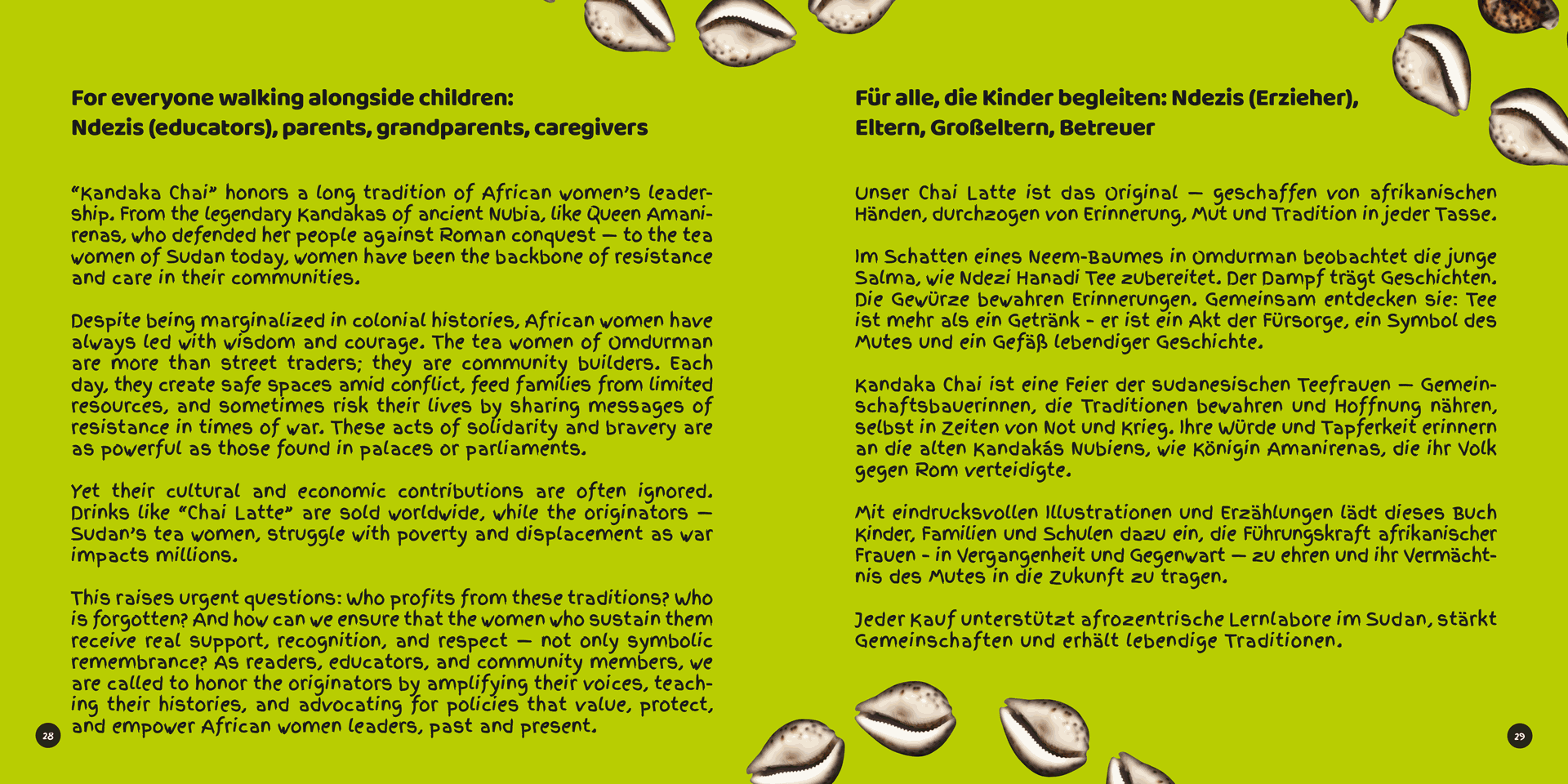
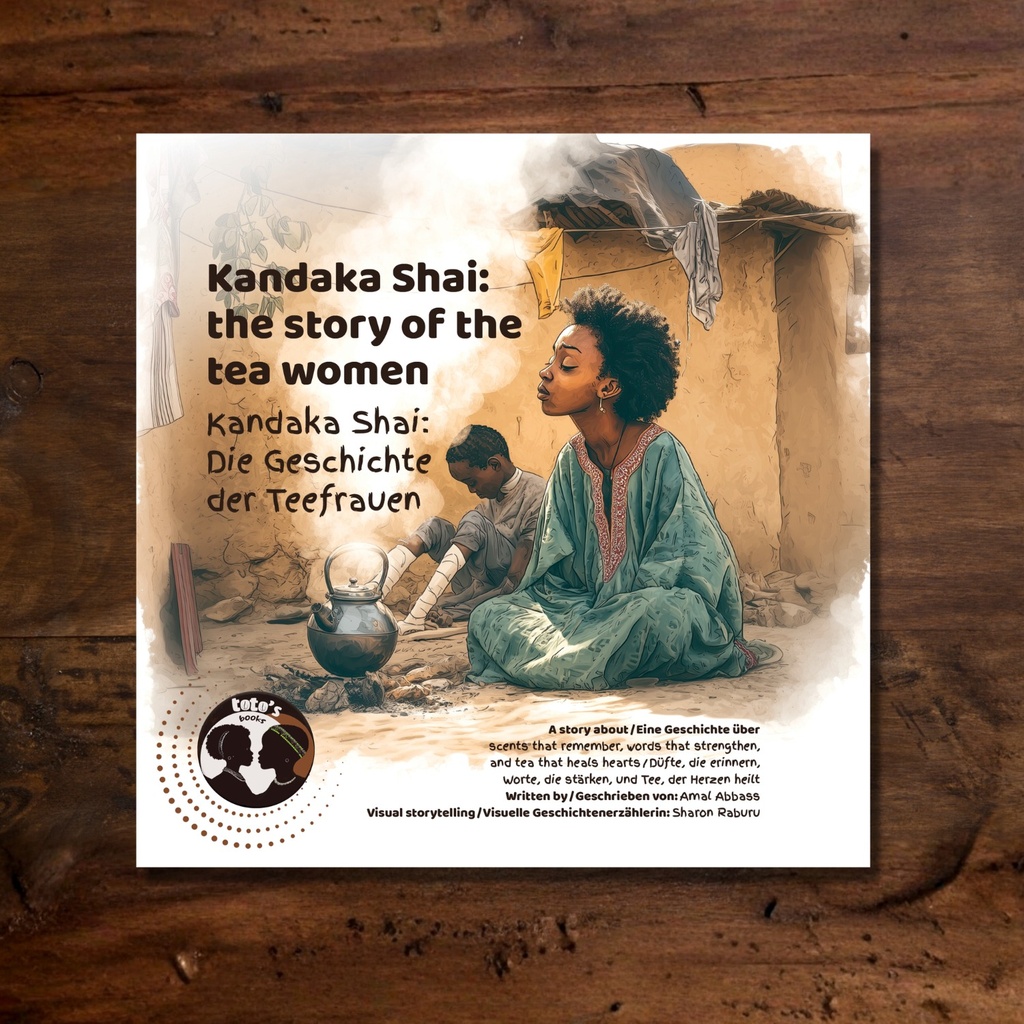
Kandaka Shai is a story about memory, care, and the quiet power of women who keep culture alive when the world begins to unravel.
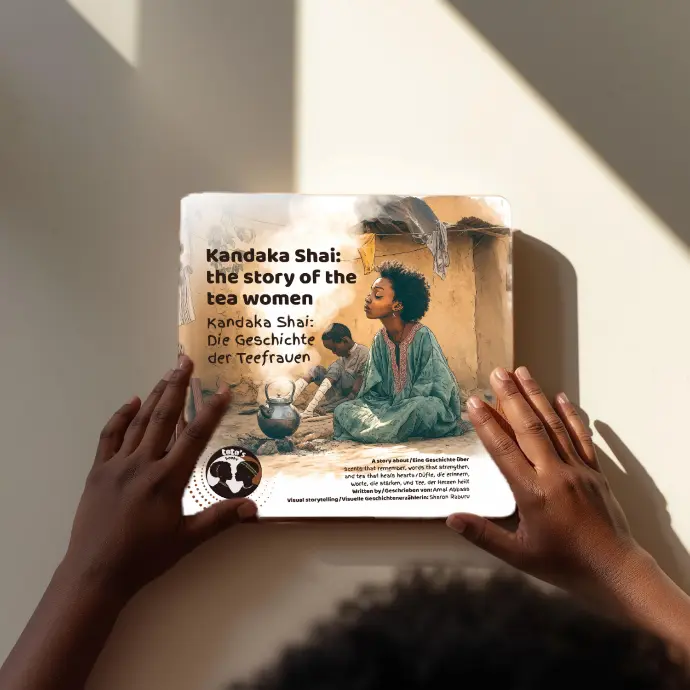
Set in Omdurman, the story follows Ndezi (educator) Hanadi, a Sudanese tea woman, and her young apprentice Salma, whose daily tea-brewing ritual becomes a lesson in patience, leadership, and love.
WHAT'S INSIDE
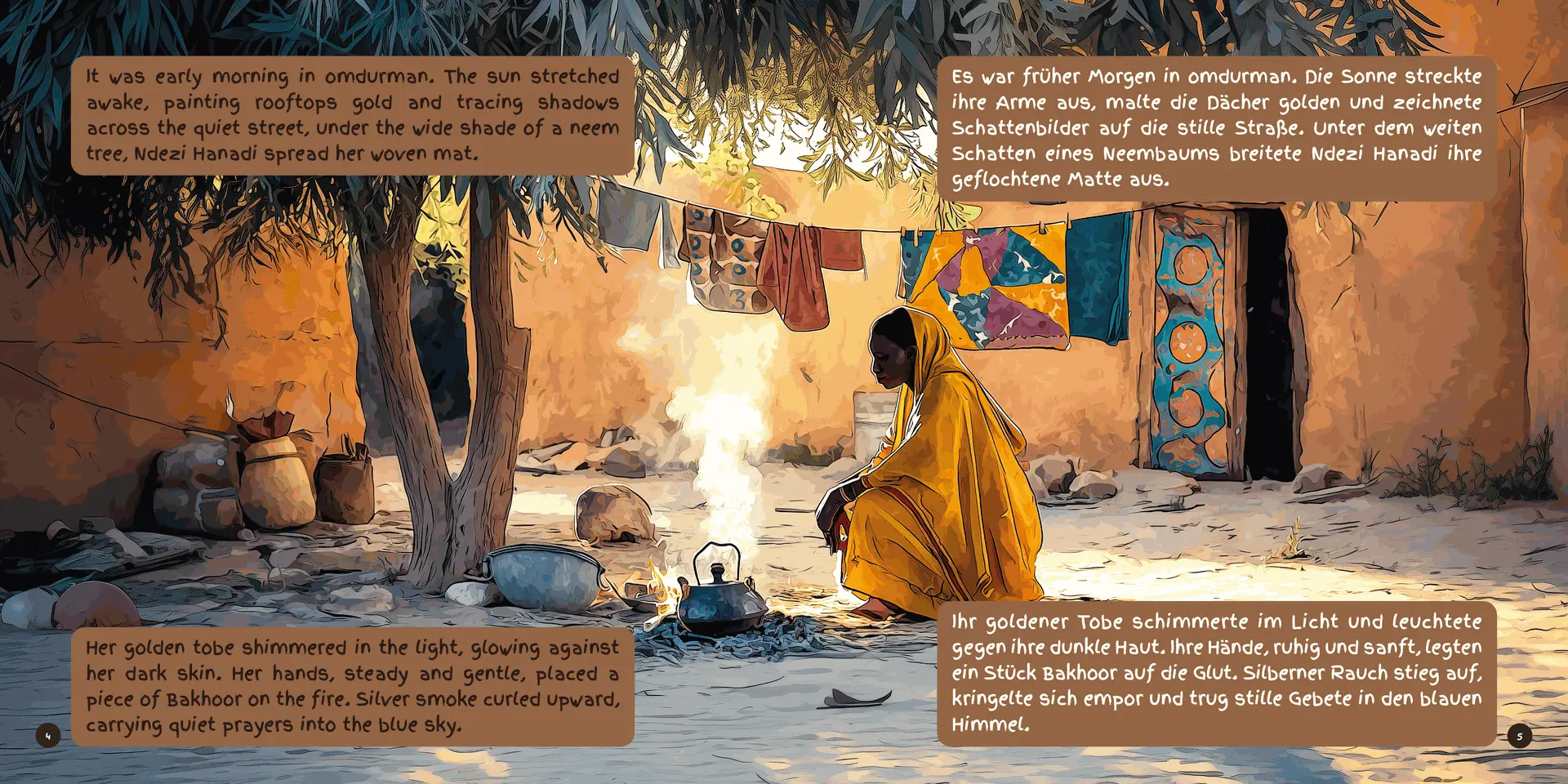
In Sudan, brewing tea is not simply a domestic task - it’s an act of community survival. Hanadi’s steady hands represent countless women who hold fractured worlds together through ritual and rhythm.
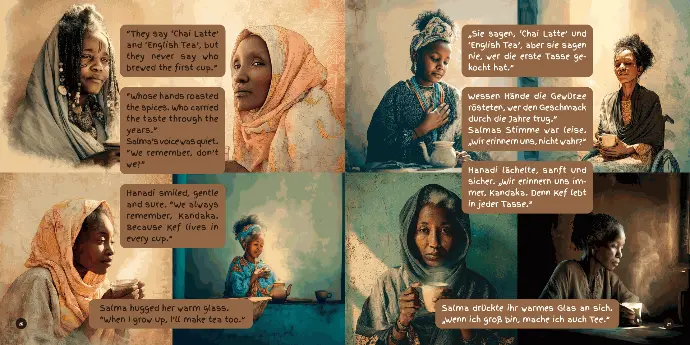
The story echoes the resilience of Sudan’s tea women - whose stalls often become places of refuge, news, and solidarity.
Through Ndezi Hanadi, children learn that gentleness is not weakness, but a form of strength that resists chaos without noise.
The scents of cinnamon, clove, and cardamom carry centuries of Nubian memory, from ancient trade routes along the Nile to songs sung in exile. Each pour is a reminder that culture endures through practice.
By honoring everyday gestures, Kandaka Chai reclaims domestic spaces as an archive - a living museum of Sudan’s collective soul.
Matriarchal Wisdom & Queen Amanirenas
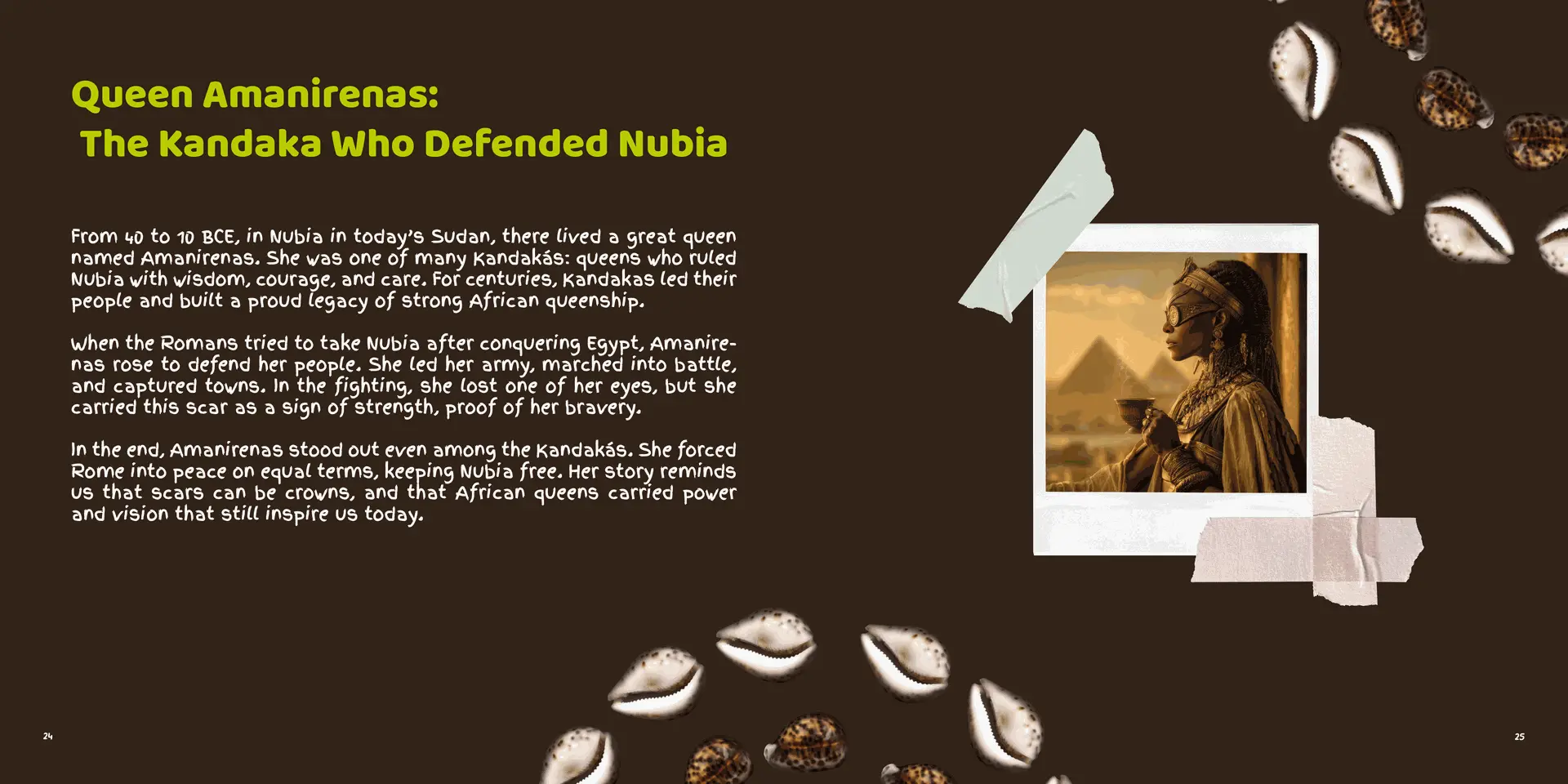
The interlude on Queen Amanirenas reframes heroism for young readers. Known as the Kandaka who led Nubia against Rome, Amanirenas becomes a moral compass - teaching Salma that leadership is not volume but rhythm. Leadership is not dominance but grace.
Her name, derived from Kandake, meaning Queen mother, becomes a symbol of lineage: every act of care, every cup poured, extends her legacy.
For Caregivers and Educators
The book’s final pages include sensory and reflective exercises designed for classrooms and family reading.
✅ Movement & Ritual: slow tea-brewing and storytelling circles to practice mindfulness.
✅ Reflection Prompts: “What does kindness smell like?” “Who keeps you steady?”
✅ Creative Expression: painting with tea water, writing thank-you notes, and honoring local heroines.
These activities foster emotional literacy by grounding them in cultural traditions, connecting Sudanese hospitality with social-emotional learning frameworks.
?unique=41474d4)
.webp?unique=4744aeb)
.webp?unique=3e94d87)
.webp?unique=3e94d87)
.webp?unique=3e94d87)
.webp?unique=b61a299)
?unique=41474d4)
.webp?unique=4744aeb)
.webp?unique=3e94d87)
.webp?unique=3e94d87)
.webp?unique=3e94d87)
.webp?unique=b61a299)