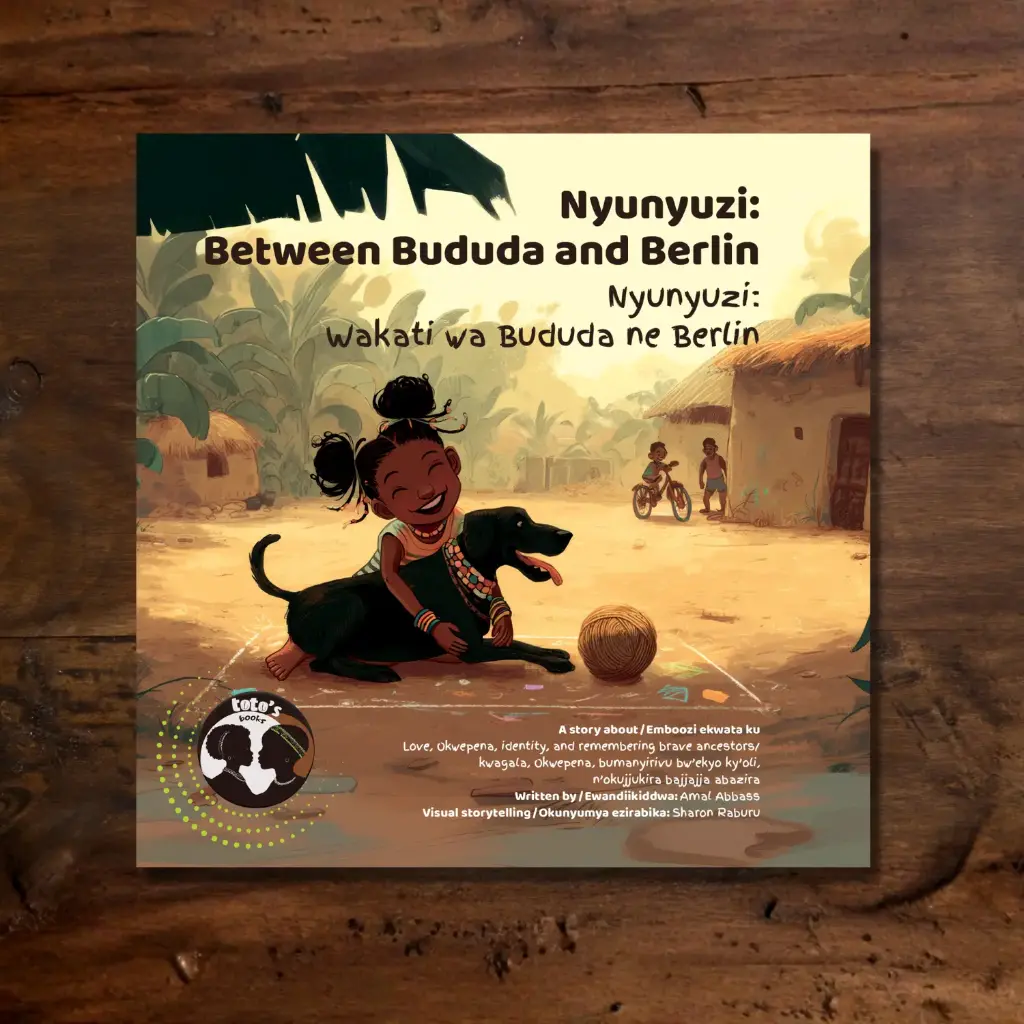
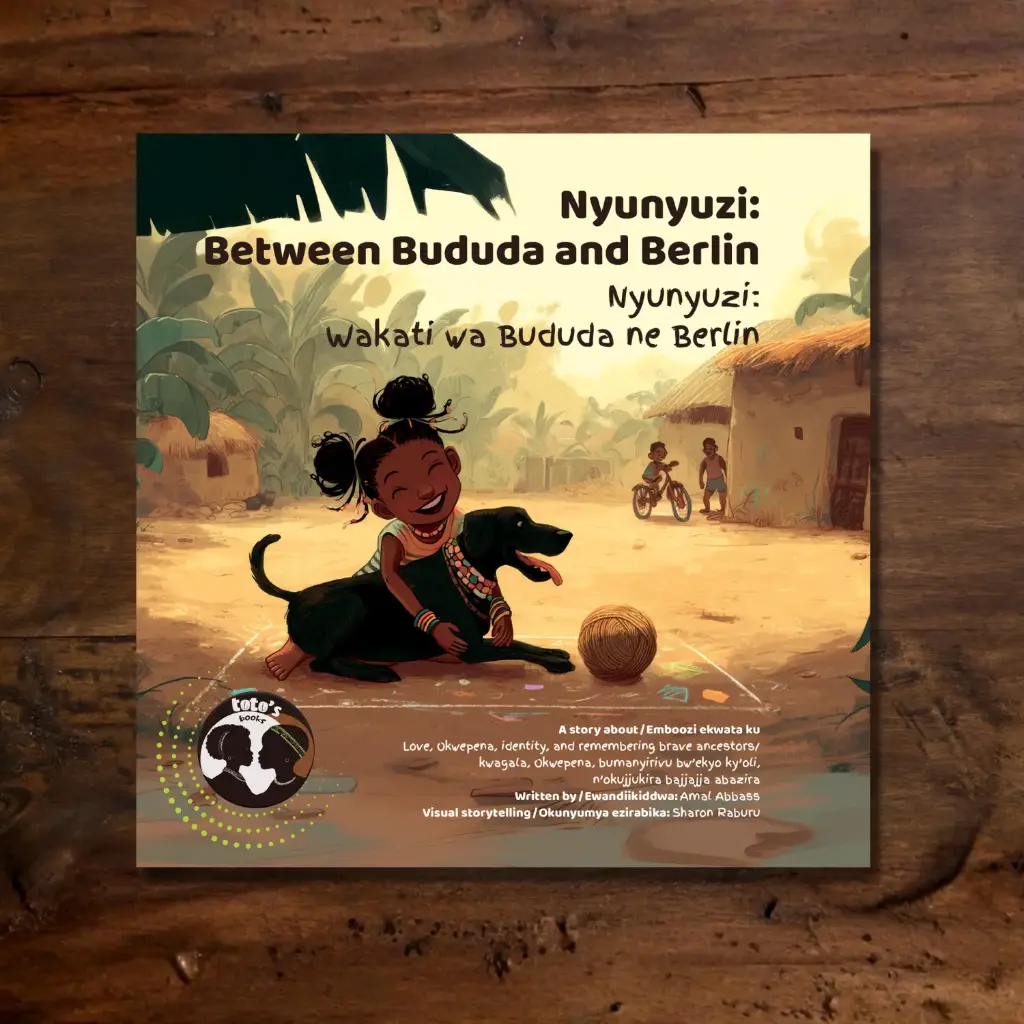
A story about ancestral memory, Okwepena, and the courage to answer: “So… what am I?”
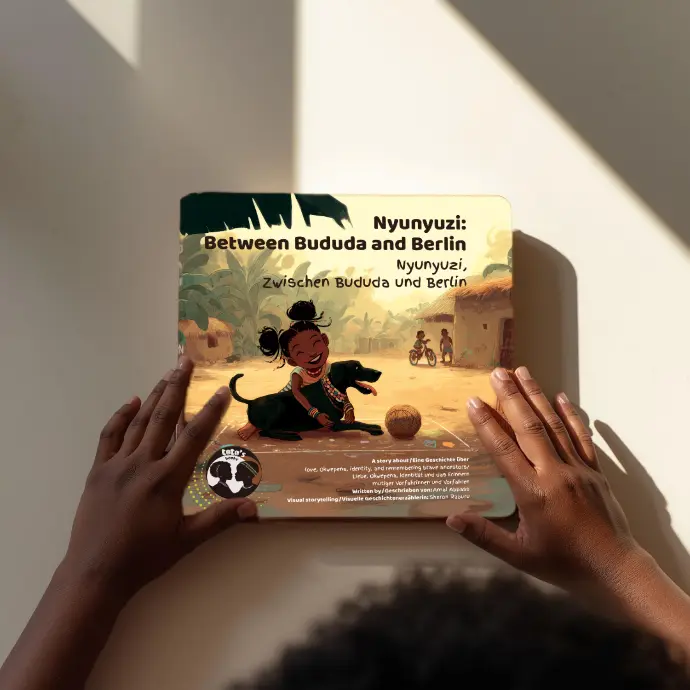
For children growing up between languages, places, and systems that don’t always see them fully, Nyunyuzi turns movement, memory, and naming into a practice of dignity.
WHAT'S INSIDE
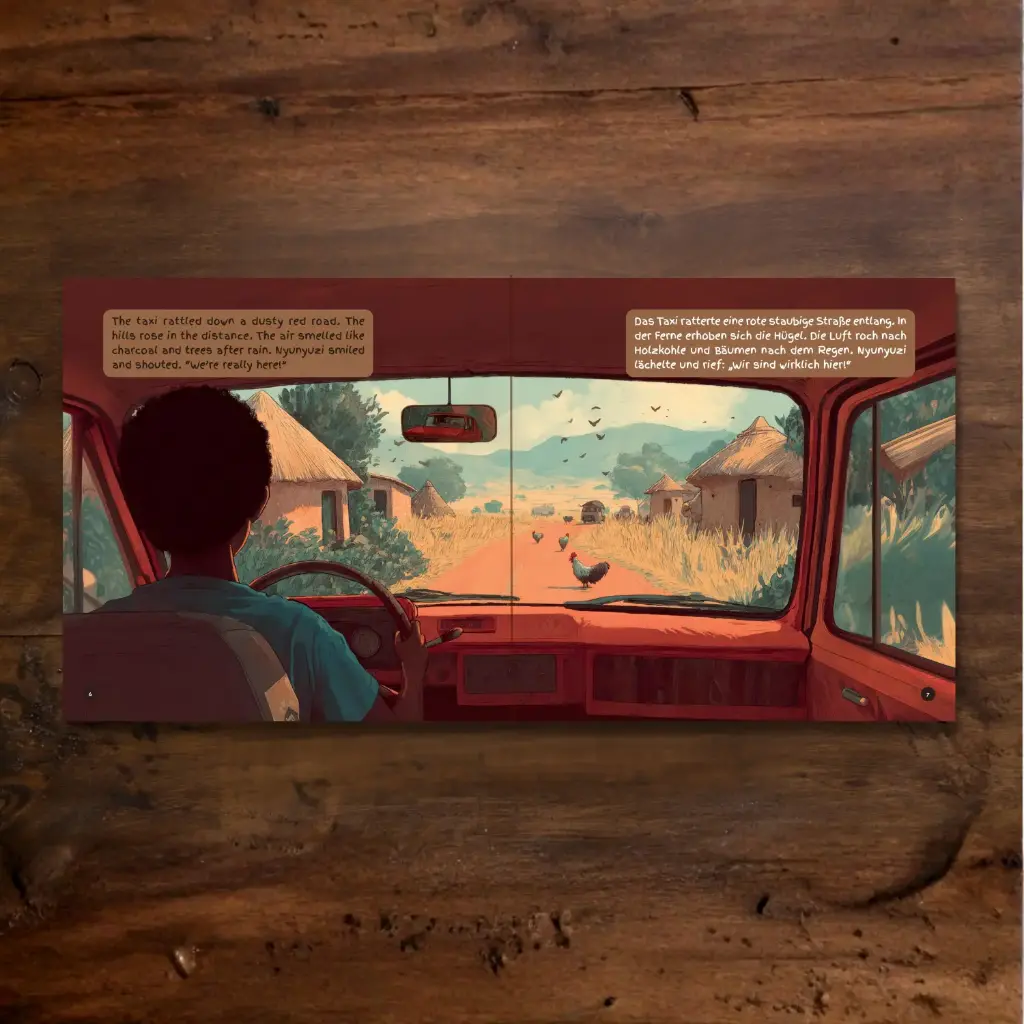
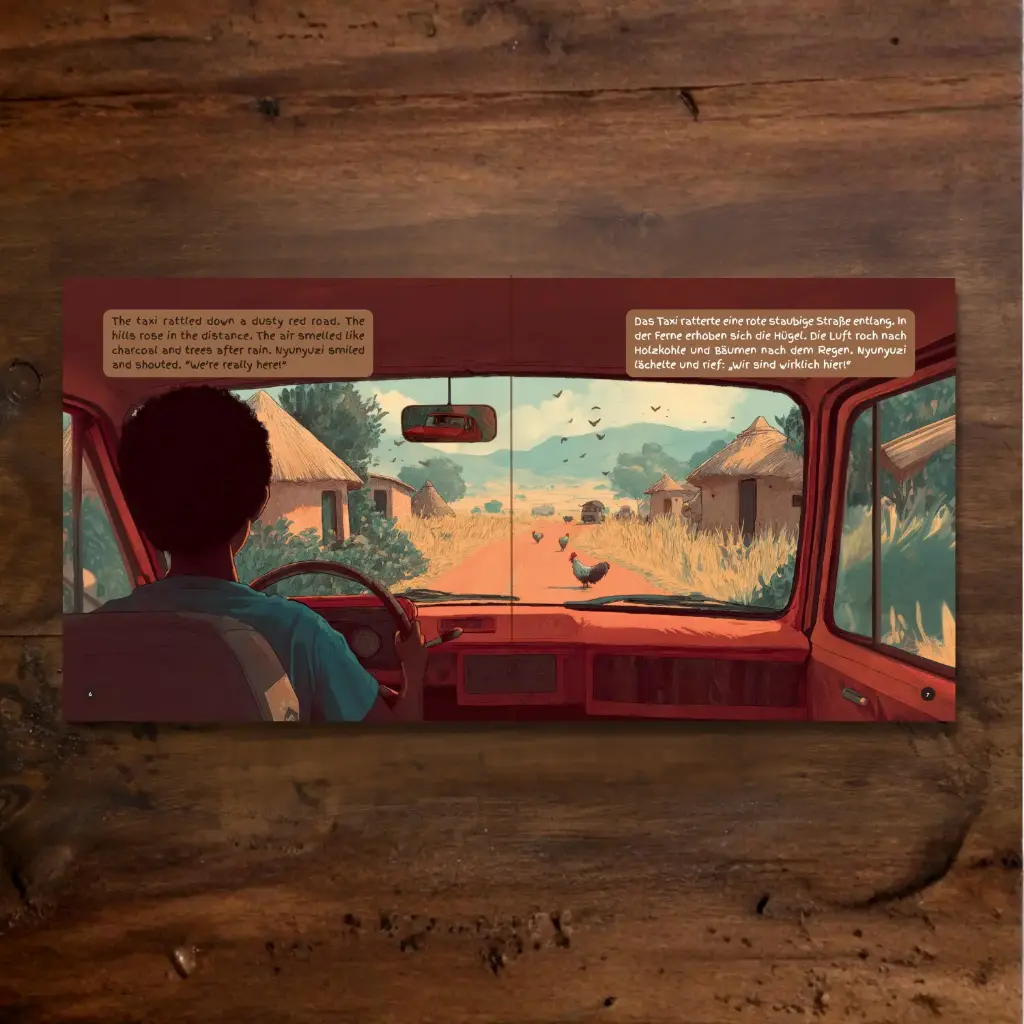
A Journey Between Two Homes
The body remembers before the mind does. Before identity becomes a question, it is a feeling. Smell. Heat. Landscape. Familiar arms waiting. The nervous system settles. The shoulders drop. This is not nostalgia. It is reorientation.
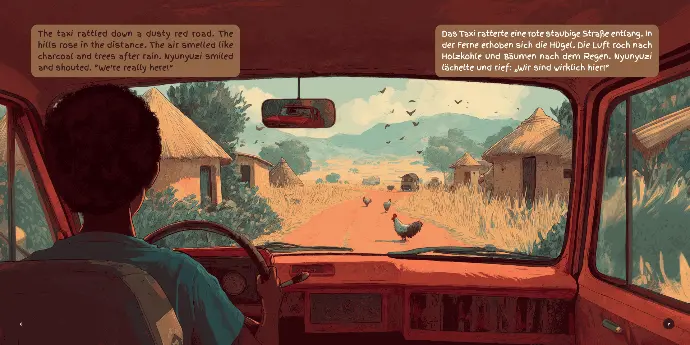
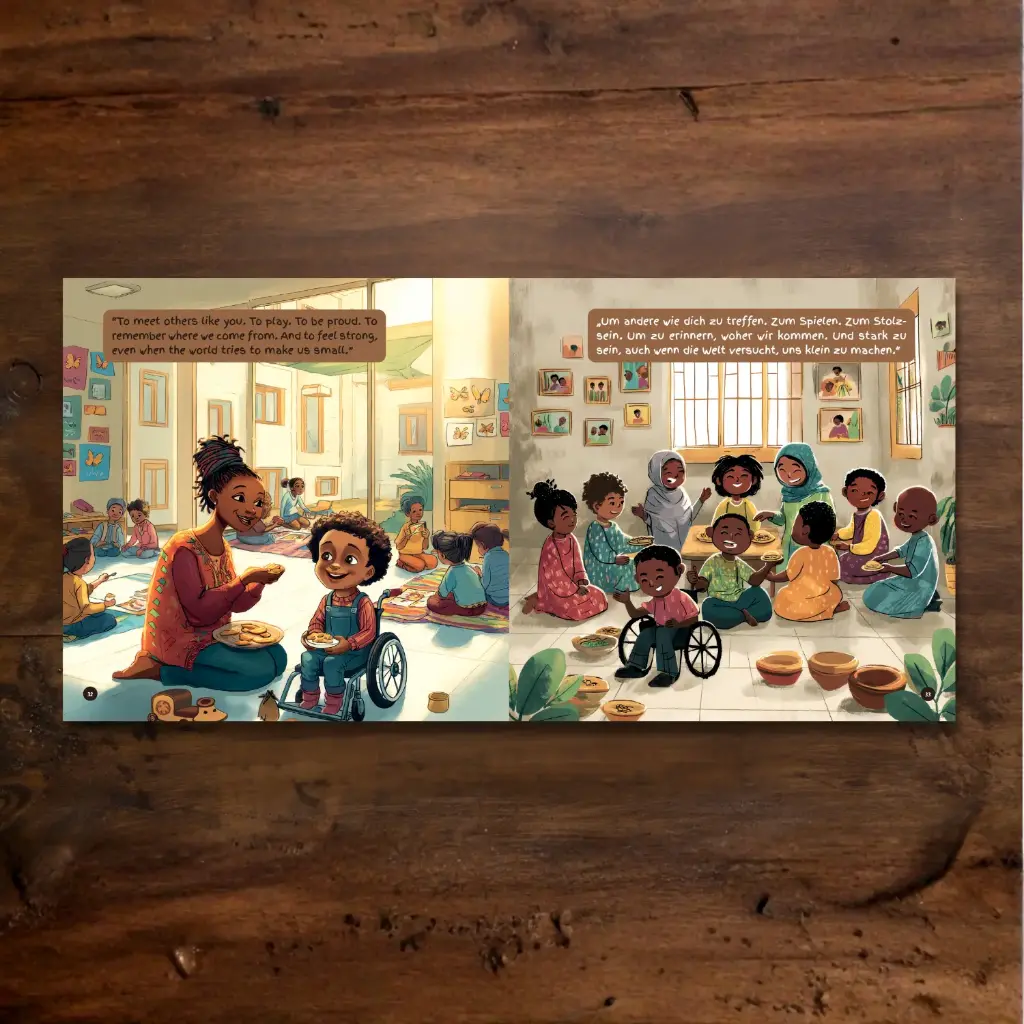
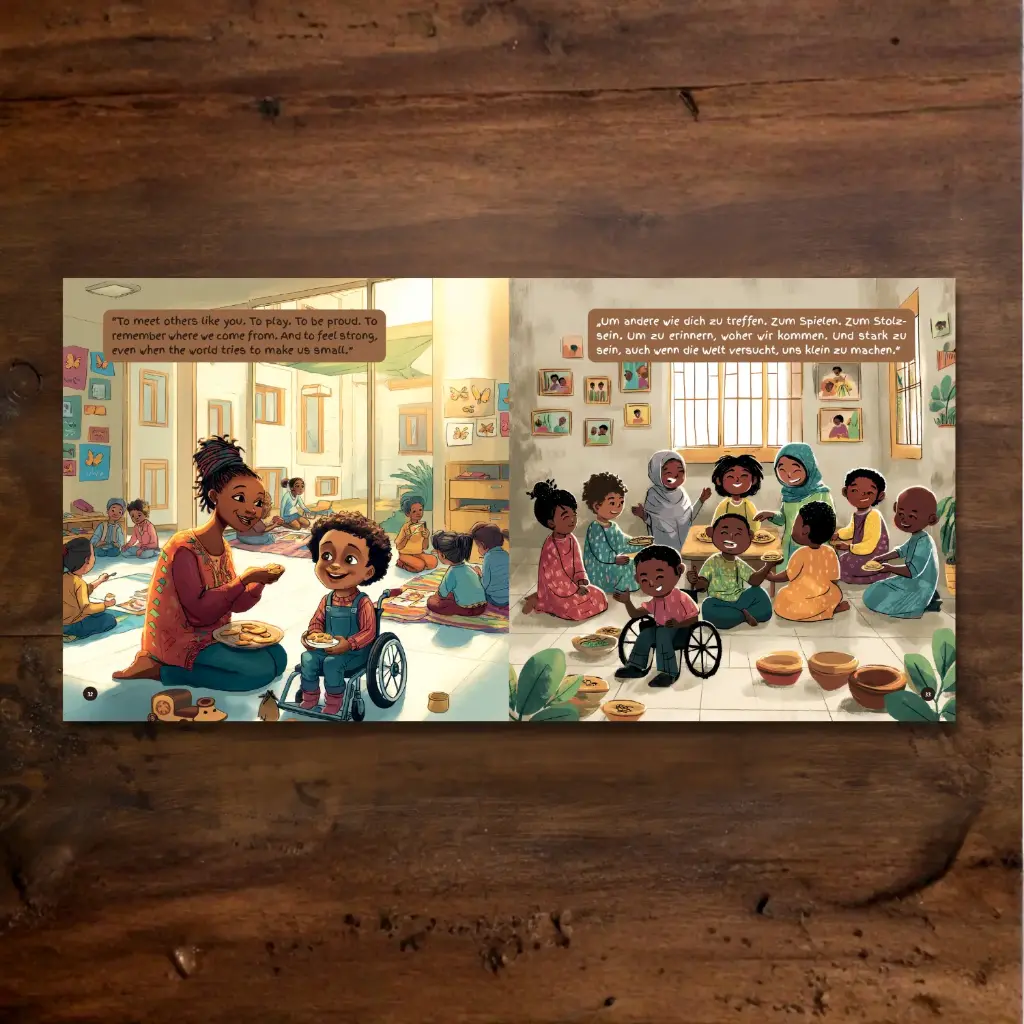
Belonging begins with recognition. That matters — especially for children who are so often asked to define themselves before they are allowed to arrive.
Okwepena — Movement as Memory
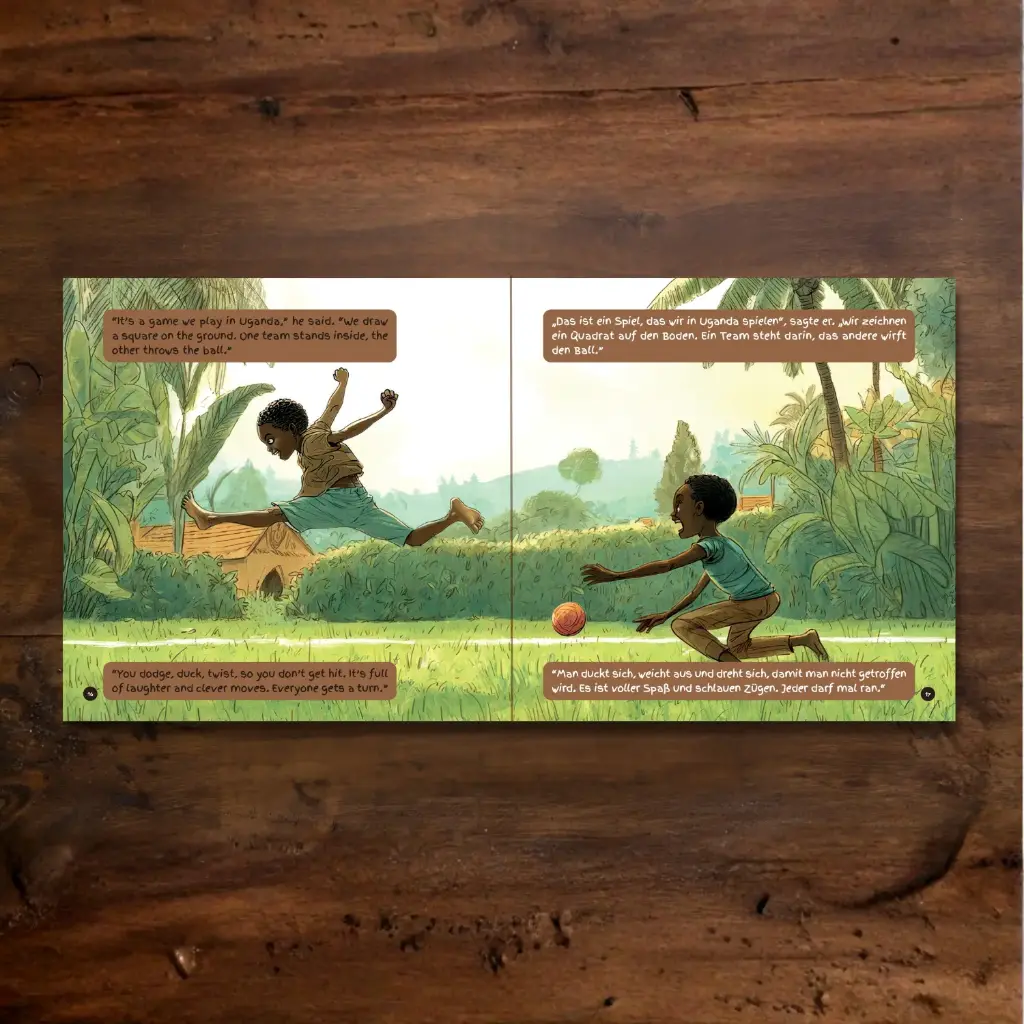
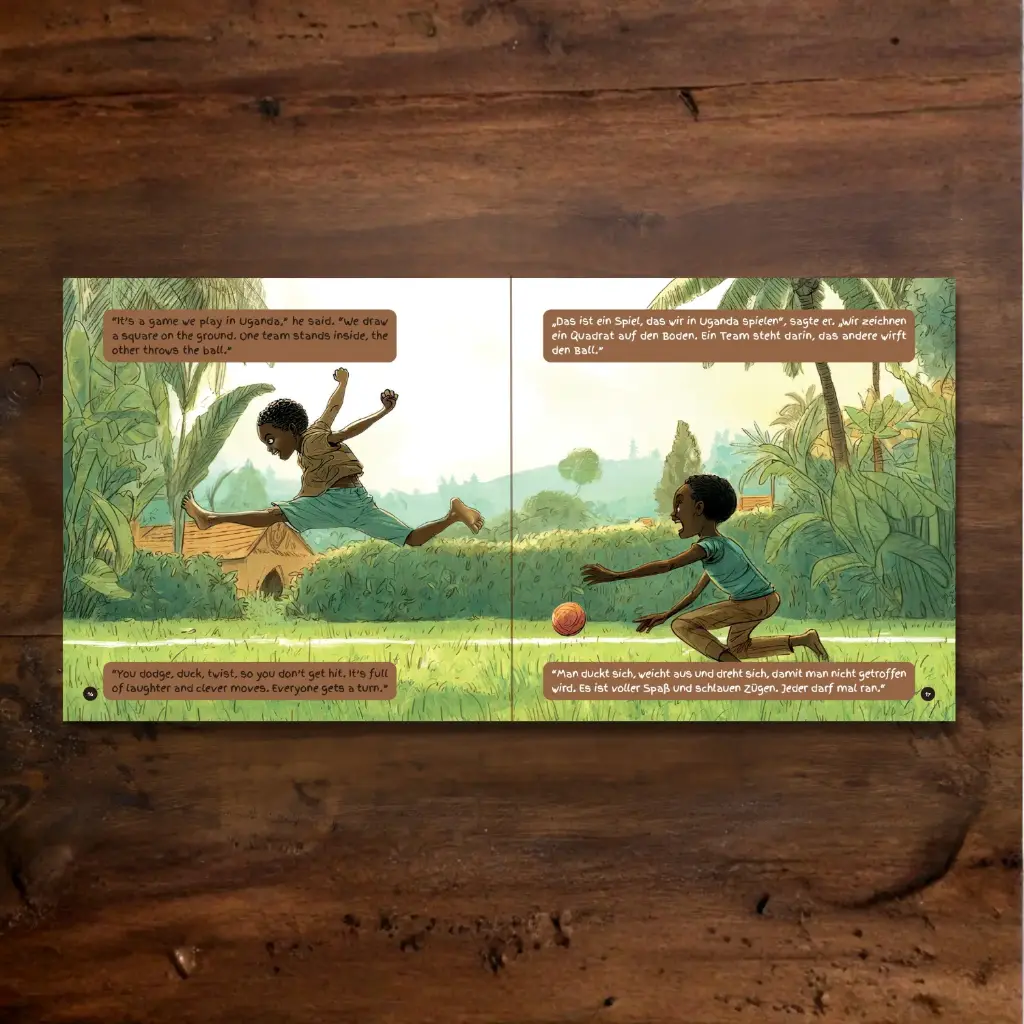
Okwepena, as played in Uganda, is part of a wider African tradition of dodge-and-throw games found across Kenya, Tanzania, Ghana, Nigeria, and South Africa.
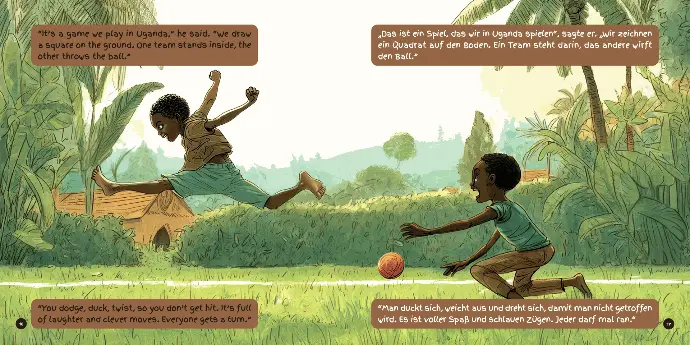
The rules shift. The names change. But the lesson is constant: awareness, timing, collective rhythm.
Rules of the game are also listed separately at the end of the book.
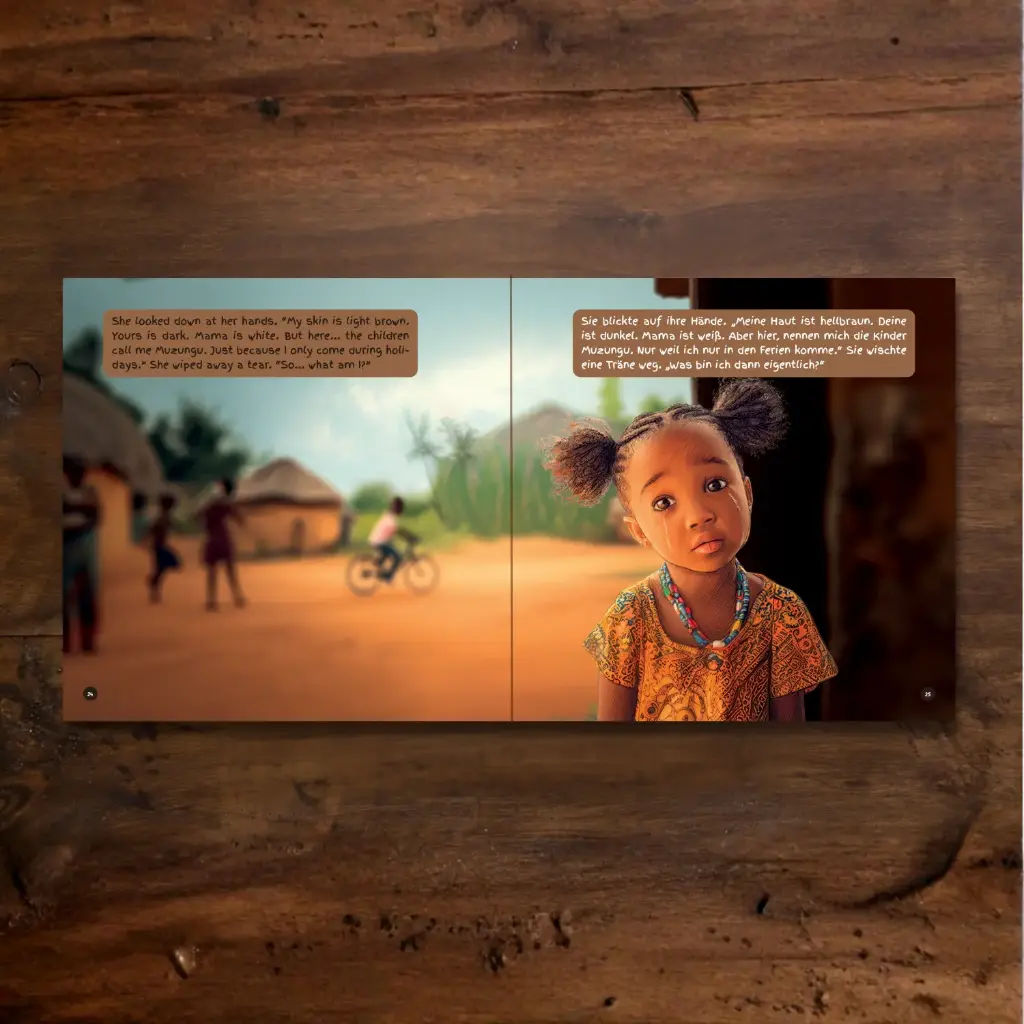
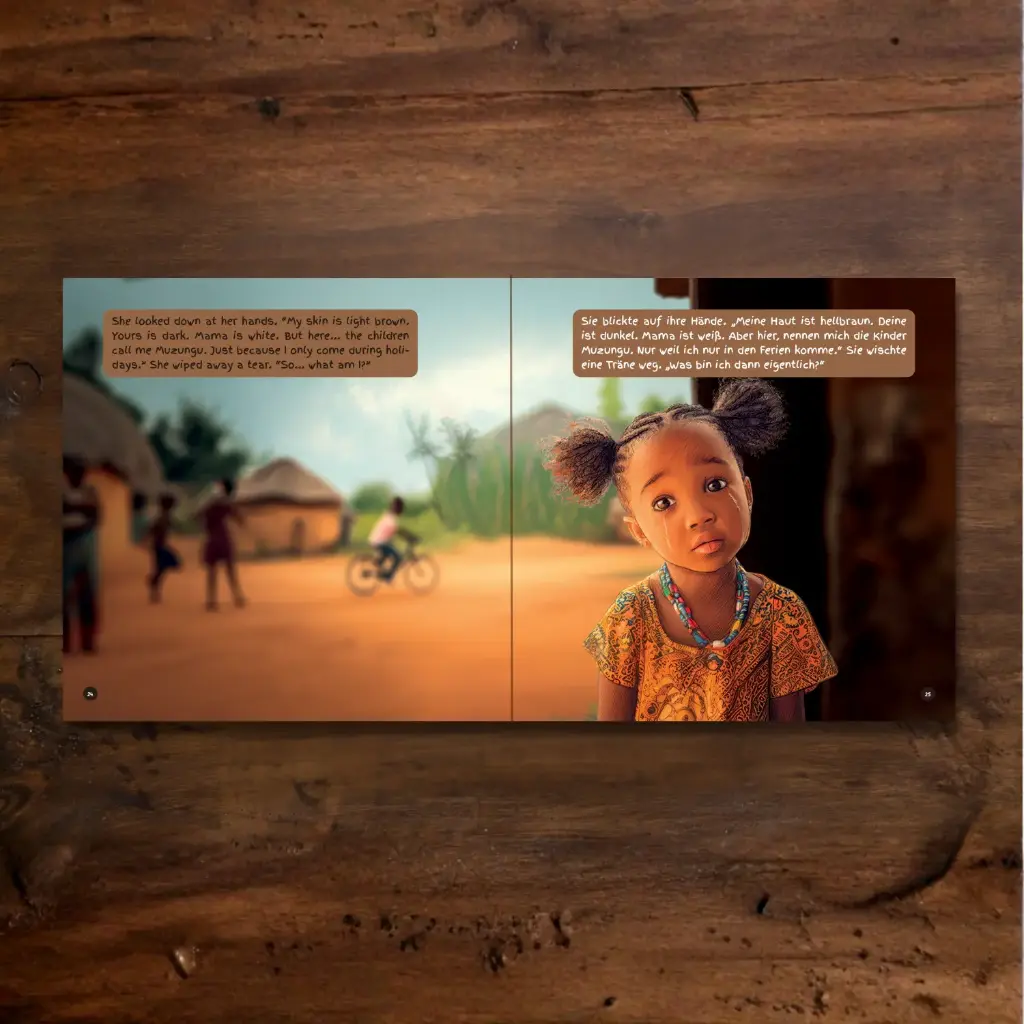
When Nyunyuzi looks at her hands and asks, “So… what am I?” She is not asking for a label. She is asking:
Where do I stand?
Who claims me?
Am I allowed to hold both?
Names can anchor. Names can fragment.
Before the world defines them, we must remind our children who they are. Not fractions. Not explanations. But connection.
Identity-safe environments are developmental necessities.
Reclaiming Memory: Anton Wilhelm Amo
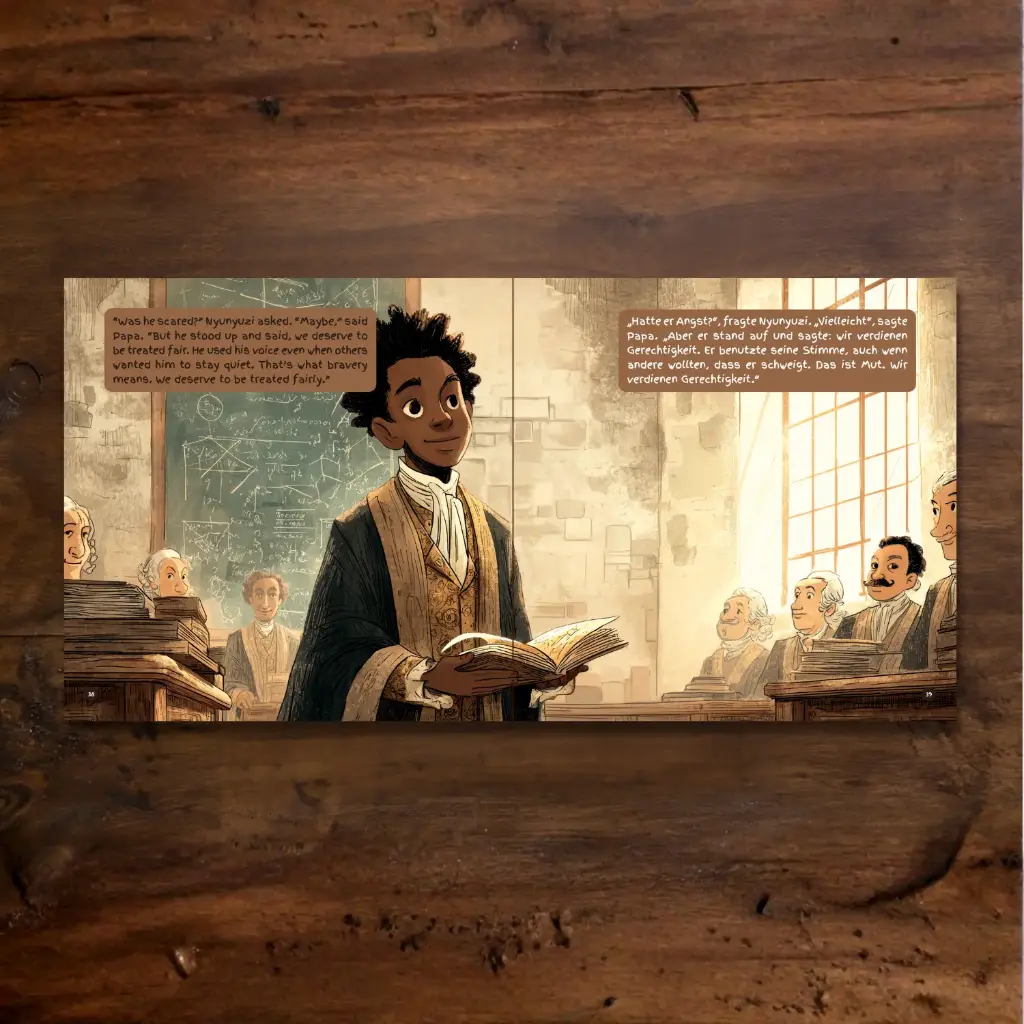
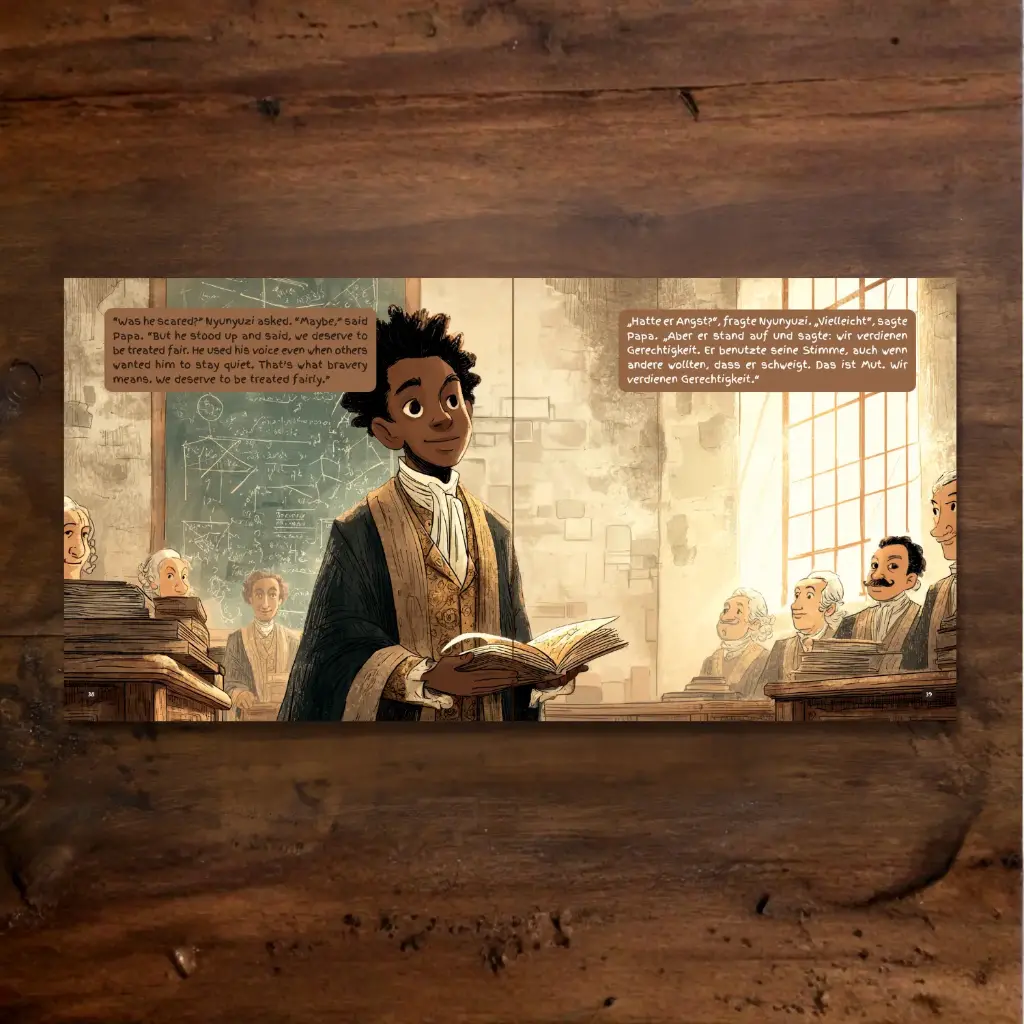
Born around 1703 in Axim (present-day Ghana), Anton Wilhelm Amo was brought to Germany as a child. He later studied at the University of Halle and the University of Wittenberg, earning his doctorate in 1734.
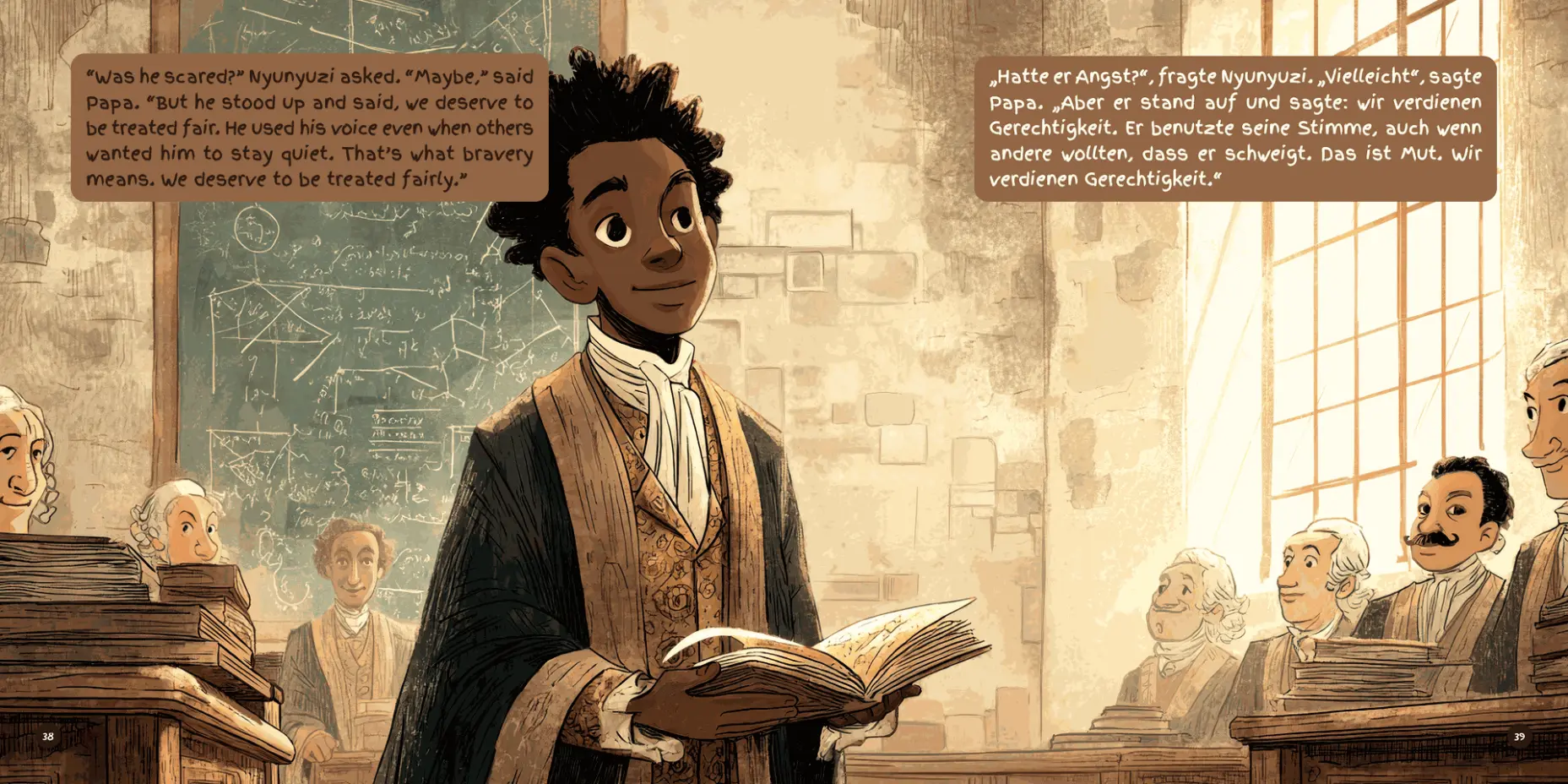
He defended dignity and fairness in a time that denied both to African people. His presence in history disrupts the myth that Black thought is external to European history.
Caregiver & Educator Guidance
Children grow toward the language we give them.
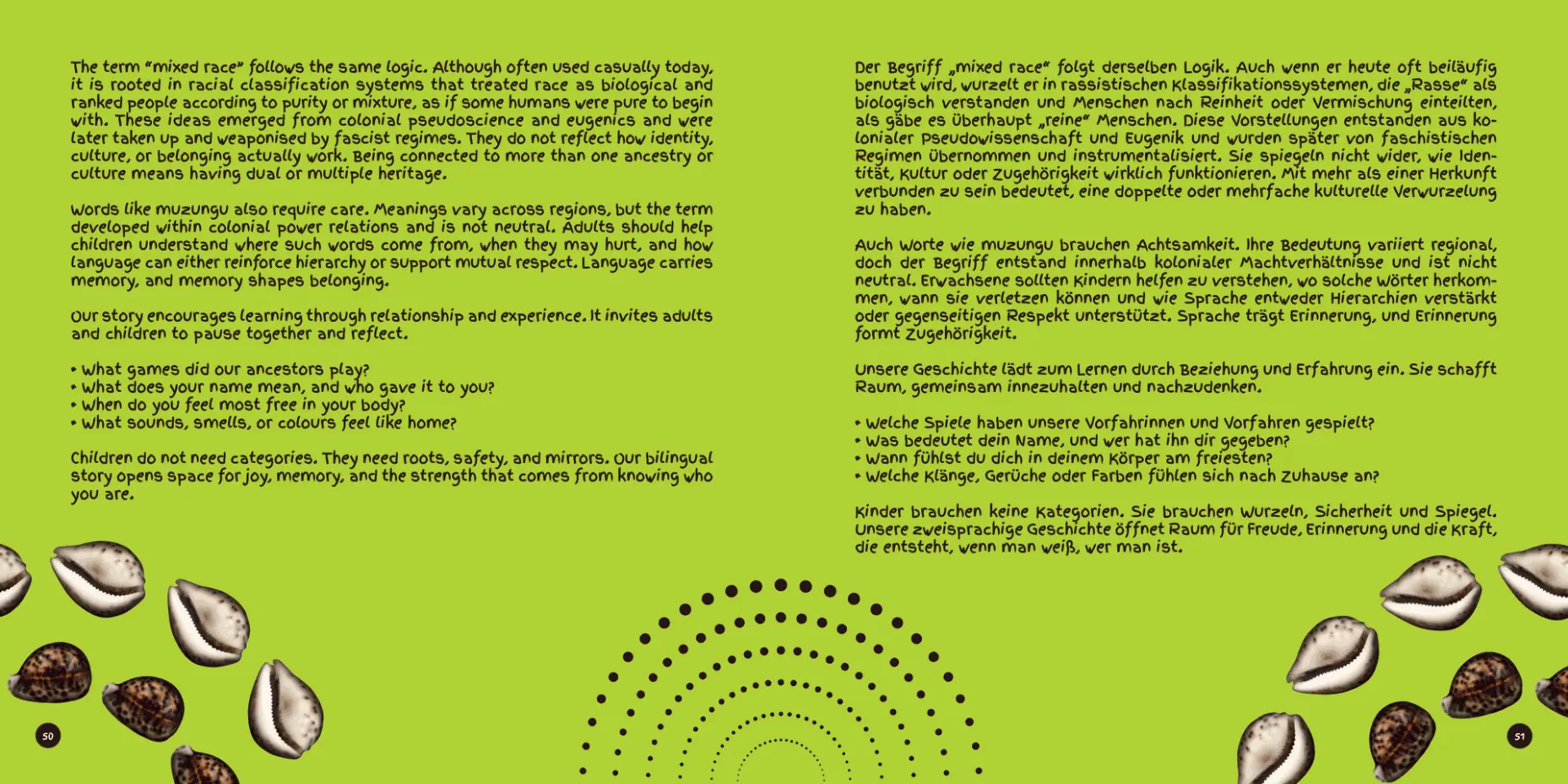
This guidance section supports caregivers and educators in:
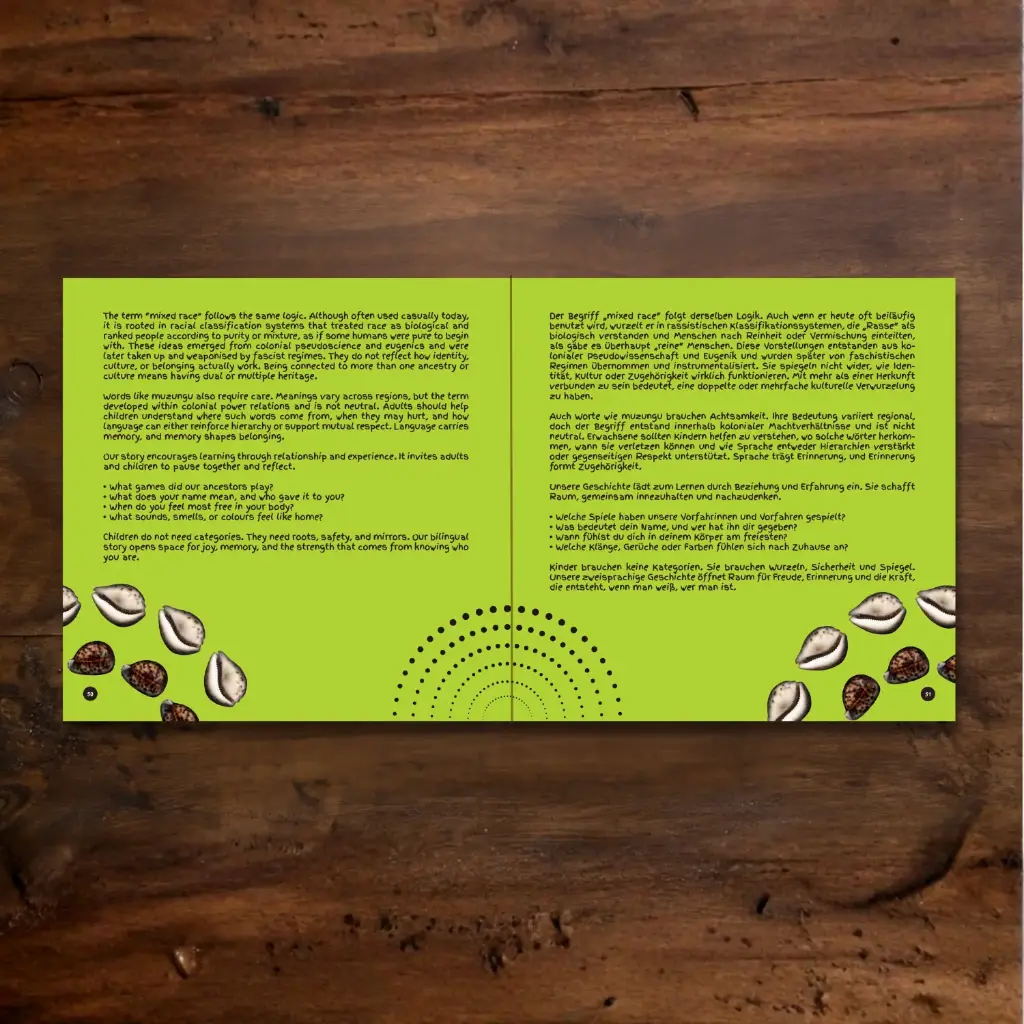
✅ Identity-Safe Language Guidance (moving beyond fraction-based and colonial terminology)
✅ Historical Context (introducing Anton Wilhelm Amo within German and African intellectual history)
✅ Embodied Cultural Learning. Okwepena as coordination, strategy, and collective rhythm. (Includes a detailed description of the game.)
✅ Reflective Prompts for Home & Classroom Dialogue
?unique=b2836fd)
?unique=b2836fd)